Getting into a car accident shakes you up. Once the dust settles and you’ve checked on everyone’s safety, the next big question hits: who caused this? Figuring out fault matters because it affects who pays for your medical bills, lost income, and vehicle repairs.
In New Jersey, determining fault involves looking at evidence, understanding state traffic laws, and sometimes dealing with insurance companies that want to minimize what they owe you. At Reinartz Law Firm, we’ve spent years helping injured people throughout Bergen County prove liability and recover fair compensation. If you’re unsure about your next steps, consider reaching out to a car accident attorney for guidance.
Key Takeaways: Determining Fault in New Jersey Car Accidents
- New Jersey uses a choice no-fault system, but fault still matters for serious injury claims and property damage. Understanding how fault is determined protects your right to full compensation.
- Police reports document the scene and often include an officer’s opinion on fault. These reports carry weight with insurance companies and in court.
- Physical evidence, such as skid marks, vehicle damage, and traffic camera footage, helps reconstruct what happened. This evidence can prove who violated traffic laws.
- Witness statements provide independent accounts of the accident. Neutral witnesses often strengthen your claim more than involved parties.
- Traffic violations captured in citations usually indicate fault. Running a red light or failing to yield typically establishes liability.
- New Jersey courts, such as the Bergen County Superior Court, handle cases involving disputed fault. Judges in Hackensack evaluate evidence to determine liability.
- Hiring a car accident lawyer ensures evidence is preserved, witnesses are interviewed, and your claim is built properly. We fight to prove the other driver’s negligence so you receive fair compensation.
Understanding New Jersey’s Fault System
New Jersey operates under a choice no-fault insurance system. When purchasing car insurance, you can select either a standard policy or a basic policy. With a standard policy, you can sue the at-fault driver for pain and suffering if your injuries meet certain injury thresholds. Even in a no-fault state, determining who caused the accident is essential.
Personal Injury Protection coverage pays your initial medical bills and lost income regardless of fault. If your injuries are severe, such as permanent disfigurement, significant scarring, broken bones, or substantial impairment, you can file a lawsuit against the responsible driver. Insurance companies often argue that you share blame or claim their client is not at fault to reduce or deny compensation.
The Role of Police Reports in Establishing Fault
After an accident in Hackensack or anywhere in Bergen County, law enforcement responds quickly to document the scene. Their work provides important details that can affect your case.
- Officers document visible damage, road conditions, and interview drivers and witnesses.
- They create an official police report, which often includes the officer’s assessment of fault.
- Citations for running a stop sign, speeding, or illegal lane changes strongly indicate fault.
- The report captures details that often fade from memory, such as weather conditions, traffic signals, and road defects.
Our car accident lawyers obtain and analyze these reports to support your case.
Physical Evidence Tells the Story
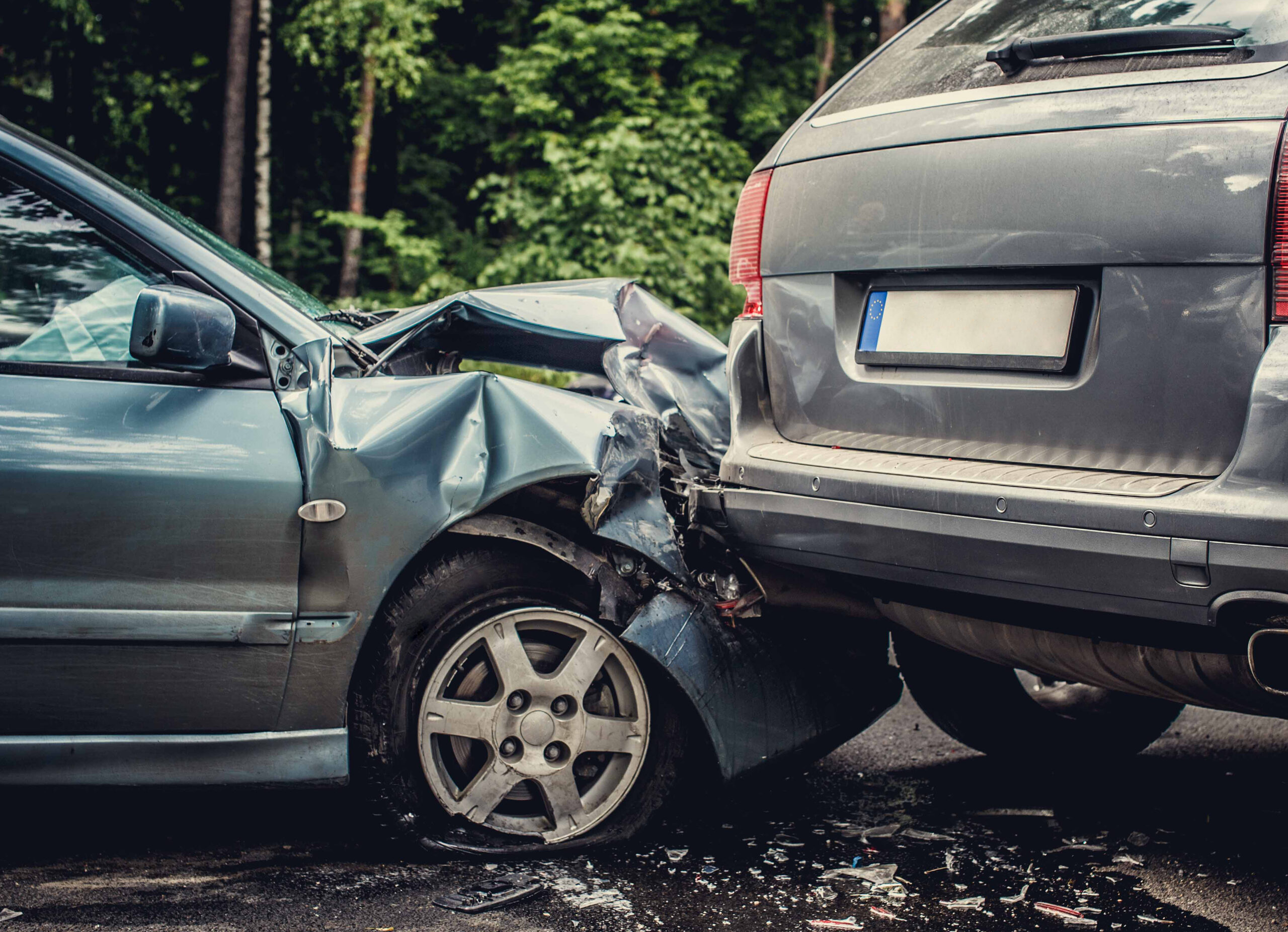
The accident scene holds clues. Skid marks show where a driver braked hard, possibly indicating they weren’t paying attention. The location and severity of vehicle damage reveal impact angles and speeds.
A rear-end collision usually means the following driver is at fault because they failed to maintain a safe distance. Dashboard cameras and traffic cameras are game-changers. Many intersections in Bergen County have surveillance systems.
Nearby businesses might have security footage. This video evidence removes doubt about what happened. It shows whether a driver ran a red light, failed to yield, or merged recklessly.
Photos taken immediately after the crash preserve evidence before vehicles are moved. Capture all angles of damage, street signs, signals, and road conditions. If you’re too injured to take photos, witnesses or responding officers often do.
Witness Statements Provide Independent Accounts
People who saw the accident happen are valuable. Unlike you and the other driver, witnesses have no stake in the outcome. Their statements carry objectivity.
A witness might confirm that the other driver was texting, speeding, or drove through a red light. They might describe how traffic was flowing or whether construction affected visibility. Insurance companies take witness accounts seriously, especially when multiple witnesses tell the same story.
Our attorneys interview witnesses promptly. Memories fade, and people move or become harder to reach. We document their statements formally so they can support your claim.
Traffic Laws and Violations Indicate Fault
New Jersey has clear traffic laws. Drivers must obey speed limits, stop at red lights, yield right-of-way, and maintain a safe following distance. Breaking these laws often establishes fault.
For example, New Jersey law requires drivers to maintain an assured clear distance behind the vehicle ahead. In a rear-end accident, the trailing driver is usually at fault. Similarly, drivers turning left must yield to oncoming traffic.
If someone turns left into your path and causes a collision, they’re typically liable. Citations issued at the scene document these violations. A speeding ticket or failure-to-yield citation is powerful evidence.
Even without a citation, our car accident attorneys can demonstrate that a driver violated traffic laws through other evidence. It might include traffic camera footage or witness testimony about what happened.
Insurance Companies and Fault Investigations

After you report an accident, insurance companies launch investigations. They send adjusters to examine vehicles, review police reports, and interview involved parties. Their goal is to minimize payouts.
Adjusters often contact you shortly after the accident, asking for recorded statements. Be careful. They’re looking for anything to reduce your claim—statements you make might be twisted to suggest you share fault.
Insurance companies sometimes dispute clear liability. They might claim their driver had the green light or that you were speeding. They delay and deny to pressure you into accepting less than you deserve.
This is where having a car accident lawyer makes all the difference. We handle all communication with insurance companies. We present evidence systematically, countering their arguments and protecting your rights.
Understanding How Responsibility Gets Divided
Sometimes, both drivers share some responsibility. The insurance company might argue that, although their driver ran a stop sign, you were going slightly over the speed limit. They use any shared responsibility to reduce what they owe.
New Jersey law allows you to recover compensation even if you bear some responsibility, as long as the other driver is primarily at fault. However, your compensation is reduced based on the amount of responsibility you share. Insurance companies exploit this by exaggerating your role in the accident.
Our lawyers fight these tactics. We present evidence that clearly establishes the other driver’s responsibility and minimizes arguments about your actions.
Reconstructing the Accident
Complex accidents require reconstruction. Professionals analyze skid marks, vehicle damage, road conditions, and physics to determine how the crash occurred. They calculate speeds, impact angles, and timing.
Reconstruction professionals testify in court, explaining their findings to judges and juries. Their reports often settle disputes about fault. If the insurance company claims their driver wasn’t speeding, reconstruction analysis might prove otherwise.
We work with qualified accident reconstructionists when your case requires it. These professionals provide the technical analysis that supports your claim.
Documentation You Need to Gather

Building a strong fault case requires thorough documentation. Start with the police report, but don’t stop there. Collect medical records showing your injuries and treatment.
Keep repair estimates and receipts. Save correspondence with insurance companies. Document your injuries and recovery.
Photos showing bruises, cuts, or mobility limitations help illustrate the accident’s impact. Keep a journal to note pain levels, missed workdays, and the impact of injuries on daily activities. The more documentation you provide, the stronger your case will be.
Our attorneys organize this information, presenting it effectively to insurance companies or in court. We understand what evidence matters most and how to utilize it effectively.
Common Fault Scenarios in New Jersey
Certain accident types have predictable fault patterns. Rear-end collisions typically fault the following driver. Left-turn accidents usually fault the turning driver.
Head-on collisions often involve someone crossing the center line. T-bone accidents at intersections depend on traffic signals and right-of-way rules. If someone runs a red light and hits you, they’re at fault.
Parking lot accidents can be particularly challenging because both drivers may be backing up or navigating tight spaces. Multi-vehicle pileups involve complex fault questions. Several drivers might share responsibility, and untangling these cases requires careful investigation.
How Bergen County Courts Handle Fault Disputes
When insurance companies refuse to accept liability or offer fair compensation, cases often proceed to court. Bergen County Superior Court in Hackensack handles personal injury lawsuits. Judges evaluate evidence and determine fault when parties can’t agree.
The court process involves filing a complaint, exchanging evidence through discovery, and potentially going to trial. Judges consider police reports, witness testimony, physical evidence, and applicable traffic laws. They also hear from accident reconstruction professionals when necessary.
Having legal representation familiar with Bergen County courts gives you an advantage. We know how local judges evaluate evidence and what arguments resonate.
Why Legal Representation Matters
Determining fault isn’t just about knowing who caused the accident. It’s about proving it with admissible evidence. It’s about countering insurance company arguments and fighting for full compensation.
Car accident attorneys know what evidence courts find persuasive. We understand New Jersey traffic laws and how they apply to your situation. We’ve handled cases in Bergen County Superior Court and know how local judges evaluate fault questions.
We also protect you from making mistakes that hurt your claim. Talking to insurance adjusters without legal guidance is risky. Waiting too long to preserve evidence weakens your case.
From the moment you hire us, we take over the legal fight. We investigate, gather evidence, interview witnesses, and build a compelling case. You focus on healing while we focus on securing the compensation you deserve.
The Impact of Fault on Your Compensation
Proving the other driver’s fault opens the door to full compensation. You can recover for medical bills, lost income, pain and suffering, and reduced quality of life. The clearer the fault, the stronger your negotiating position.
When a fault is disputed, insurance companies offer lower settlements. They know uncertain liability weakens your case. Strong fault evidence forces them to make fair offers.
Our job is to eliminate doubt. We build cases so compelling that insurance companies recognize the risk of going to trial. This pressure often leads to settlements that fully compensate you for your injuries.
FAQs: Fault in New Jersey Car Accidents
How long do I have to file a claim in New Jersey?
New Jersey’s statute of limitations for personal injury claims is two years from the date of the accident. Missing this deadline means losing your right to compensation, so contact a car accident attorney promptly.
What if the police report is wrong?
Police reports can contain errors. Your lawyer can challenge inaccuracies by presenting contradictory evidence, like witness statements, photos, or surveillance footage, to insurance companies or in court.
Can I recover compensation if both drivers share some responsibility?
Yes, as long as the other driver bears primary responsibility. New Jersey law allows recovery even when you share some fault, though your compensation may be reduced based on the circumstances.
Do I need a lawyer if the fault seems obvious?
Even when the fault appears clear, insurance companies often dispute liability to reduce payouts. A personal injury lawyer protects your interests and ensures you receive fair compensation.
What happens if the other driver doesn’t have insurance?
New Jersey requires drivers to carry uninsured motorist coverage. Your own policy should cover you if the at-fault driver lacks insurance, though having a lawyer helps you navigate this claim effectively.
Fighting for Injured People Across Bergen County
At Reinartz Law Firm, we believe in leveling the playing field for wrongfully injured individuals against large, well-heeled corporate defendants. We’ve handled countless car accident cases throughout Hackensack, Teaneck, Fort Lee, and all of Bergen County. What sets us apart is our detailed approach.
We recognize that even the minor details can make a difference in proving fault. Richard Reinartz, our managing member, brings decades of trial experience to every case. As one client shared, we make recommendations you wouldn’t otherwise know about and guide you with confidence through your entire case.
We arrange and organize evidence to ensure it can be used effectively, embracing systems and technology to build the strongest possible claim. If you’ve suffered an injury in a car accident and need someone to prove fault and fight for your rights, contact us today.