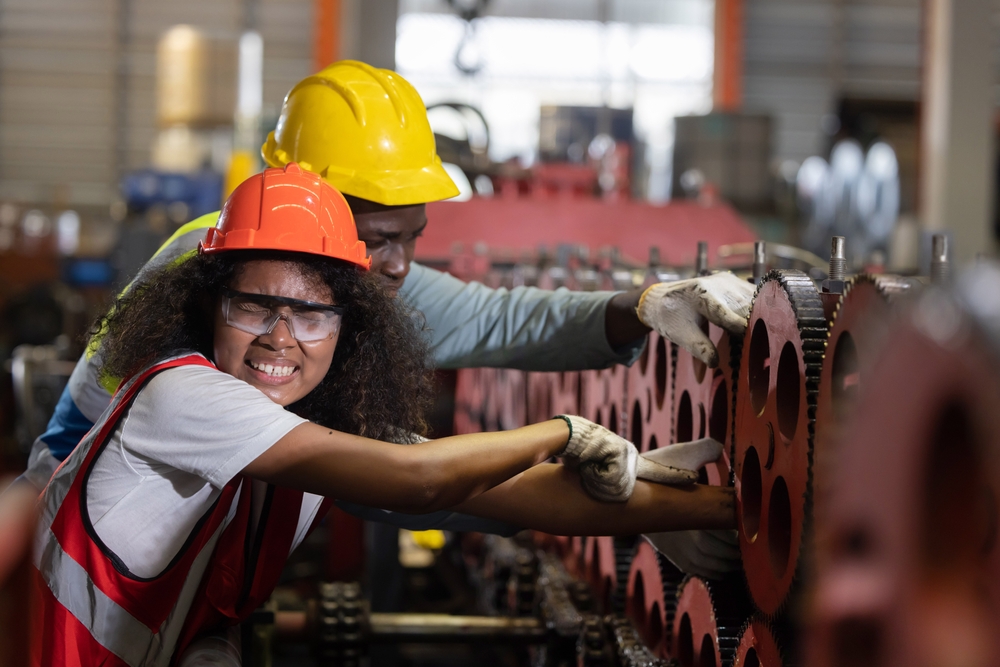

Quick Answer: The most common machine injuries in New Jersey workplaces happen because of unguarded moving parts, sudden machine startups during maintenance, broken or missing safety devices, and rushed work without proper training.
- Unguarded gears, blades, belts, and rollers cause crush, amputation, and laceration injuries.
- Machines that start up unexpectedly during cleaning or repair lead to severe trauma.
- Worn, bypassed, or missing safety guards turn routine tasks into emergencies.
- Lack of training, fatigue, and production pressure raise the risk of serious harm.
Reporting the injury in writing the same day and getting medical care right away are two of the most important steps to protect a workers' compensation claim.
Machine injuries are among the most serious accidents in New Jersey workplaces. They tend to involve heavy forces, fast-moving parts, and very little room for a second chance.
Workers in warehouses, factories, construction sites, and food processing plants across the state face these risks every shift.
If you are reading this after a press, conveyor, saw, or forklift hurt you on the job in New Jersey, a personal injury lawyer can help you understand what causes these common machine injury cases and how to keep your claim strong from day one.
Key Takeaways about Common Causes of Machine Injuries
- Most workplace machine injuries in New Jersey trace back to unguarded equipment, missing lockout/tagout steps, defective safety devices, or insufficient training.
- New Jersey workers' compensation generally covers medical care and a portion of lost wages no matter who caused the accident, with limited exceptions.
- A separate third-party injury claim may be possible when a defective machine, a contractor, or a non-employer party contributed to the harm.
- Reporting the injury in writing, seeing an authorized doctor, and saving evidence are core steps in protecting a claim.
- Strict deadlines apply to both workers' compensation and third-party claims, and missing them can end the case.
Why Machine Injuries Happen More Often Than People Realize
Heavy machines run our warehouses, factories, construction sites, and food processing plants across Bergen County and the rest of New Jersey. From the industrial corridors near Route 17 to the loading docks along the Hackensack River, working hands keep the region moving.
When a machine fails or a safety system breaks down, the worker pays the price.
Machine injuries tend to be severe because of the forces involved. A press exerts thousands of pounds of pressure. A conveyor moves at speeds that the human body cannot react to in time. A saw blade does not pause for a slipped hand.
The result is often crushed bones, deep cuts, amputations, burns, and head trauma.
These cases also tend to be complicated. There is your employer, your employer's workers' compensation insurance carrier, and possibly the company that built or maintained the machine. Each has its own interests, and those interests are not always the same as yours.
The Most Common Machine Injury Causes Seen in NJ Workplaces
Many of the same root causes of machine injuries appear over and over in workplaces around New Jersey. Understanding what likely caused a machine injury matters because it shapes both the workers' compensation claim and any potential third-party case.
Unguarded or Missing Machine Guards
Federal safety rules under the U.S. Occupational Safety and Health Administration require employers to guard moving parts that can cause injury. When guards are missing, removed, or never installed, the risk of a serious injury jumps quickly.
Common situations include:
- Power presses and stamping machines without point-of-operation guards.
- Conveyors with exposed pinch points where rollers meet belts.
- Saws, grinders, and lathes with rotating parts that are not enclosed.
- Mixers, augers, and food processing equipment with open intake areas.
A claim is often stronger when there is proof that a guard was removed, broken, or never replaced after maintenance.
Lockout/Tagout Failures
Lockout/tagout is the safety process that keeps a machine from starting up while someone is cleaning, servicing, or repairing it. When the steps are skipped or rushed, the machine can power on without warning.
These failures are often seen during shift-change cleaning, electrical troubleshooting, jam clearing, and on multi-employer worksites where outside contractors and in-house staff are not communicating well.
A surprise startup during maintenance can cause severe crush injuries and amputations in less than a second. After this kind of incident, equipment logs, energy control procedures, and witness accounts often support both a comp claim and a possible third-party case.
Defective or Poorly Maintained Equipment
Sometimes the machine itself is the problem. A design flaw, a manufacturing defect, or a worn-out component can turn safe work into dangerous work.
Examples include:
- Two-hand controls or light curtains that no longer stop the machine.
- Emergency stops that are wired around or disabled to keep production moving.
- Hydraulic lines, brakes, or clutches that have been failing for weeks.
- Forklifts and aerial lifts with bad steering, brakes, or seat belts.
When a defective product is involved, an injured worker may have a separate claim against the manufacturer or distributor under N.J.S.A. 34:15-40, the section of the New Jersey Workers' Compensation Act that addresses liability of third persons.
Insufficient Training and Production Pressure
Many machine injuries trace back to a worker being asked to operate, clean, or fix equipment they were not properly trained to handle. New employees, temporary workers, and people moved between departments are at especially high risk.
Quick over-the-shoulder demonstrations, missing written procedures, and supervisors who pressure workers to skip steps quietly do most of the damage. The worker is rarely the real cause when the system around them sets them up to fail.
How New Jersey Workers' Compensation Treats Machine Injuries
In New Jersey, workers' compensation is generally a no-fault system. That means an injured worker usually does not have to prove the employer did anything wrong to receive benefits. The trade-off is that the employee normally cannot sue the employer directly for pain and suffering.
The system is governed by Title 34, Chapter 15 of the New Jersey Revised Statutes, sometimes called the New Jersey Workers' Compensation Law. Workers' compensation benefits in machine injury cases typically include:
- Medical treatment authorized through the employer's insurance carrier.
- Temporary disability payments while a doctor keeps the worker out of work.
- Permanent partial or permanent total disability payments based on lasting effects.
- Death benefits for surviving family members in fatal cases.
It is also important to know that the choice of treating doctor in New Jersey usually belongs to the employer's insurance carrier in a comp case, which surprises many injured workers and changes how the claim plays out.
When a Machine Injury May Involve a Third-Party Claim
Workers' compensation is often only part of the picture. If someone other than the direct employer caused or contributed to the injury, there may be a separate civil claim that allows for additional damages, including pain and suffering.
Possible third parties include the manufacturer of a defective machine, a maintenance company that serviced the equipment, a general contractor on a shared job site, or a property owner who failed to keep the work area reasonably safe.
These third-party cases live alongside the comp claim and have their own deadlines and proof requirements.
How to Protect Your Claim After a Machine Injury
Once a machine injury happens, what you do in the first hours, days, and weeks can make or break the case. These steps come up again and again as the difference between a strong claim and a weak one.
Report the Injury in Writing as Soon as Possible
New Jersey law requires injured workers to give notice to the employer. Verbal reports are easy for employers to forget or deny later. A short, dated written report or email creates a record that is much harder to dispute. Include the date, time, and location of the incident, the equipment involved, a short description of how it happened, and the names of any witnesses.
Even if a verbal report has already been made, following up in writing is almost always a good idea.
Get Medical Care and Follow Through
Authorized medical care under workers' compensation is usually directed by the employer's insurance carrier. That does not mean the worker should delay treatment when something serious is happening.
After the initial visit, attend every scheduled appointment, be honest about every symptom, follow work restrictions, and keep copies of work notes, prescriptions, and bills. Gaps in treatment are one of the first things insurance carriers point to when they want to reduce or deny a claim.
Save Evidence While You Still Can
Evidence has a short shelf life in machine injury cases. Equipment gets repaired, surfaces get cleaned, and witnesses move on to new jobs.
Useful evidence often includes:
- Photographs and videos of the machine, the work area, and any visible injuries.
- Names and contact information for coworkers who saw what happened.
- Copies of training records, safety manuals, and equipment maintenance logs.
- Any text messages or emails between the worker and supervisors about the machine.
A lawyer can also send a preservation letter to the employer that requires the company to hold on to specific evidence.
FAQs for Common Machine Injury Causes in NJ Workplaces
Here are answers to questions injured workers in New Jersey often ask about machine injury claims that did not come up earlier in this post.
Does it matter if I was partly at fault for the machine accident?
In a typical New Jersey workers' compensation case, fault generally does not block benefits because the system is no-fault. Comparative fault can play a bigger role in a third-party civil claim, but it does not necessarily end the case.
What if my employer says they have no workers' compensation insurance?
New Jersey law requires most employers to carry workers' compensation coverage. If a covered employer fails to do so, an injured worker may be able to seek benefits through the Uninsured Employers Fund and may have additional legal options against the employer.
Can I be fired for filing a workers' compensation claim after a machine injury?
New Jersey law prohibits employers from firing or discriminating against an employee for filing or trying to file a workers' compensation claim. Retaliation cases are separate from the underlying comp claim and have their own legal standards.
How long do I have to report a machine injury to my employer in NJ?
New Jersey workers' compensation rules generally require notice to the employer within a short time after the injury, and certainly within 90 days. Earlier is always better, and a written report on the same day is the safest path.
Will my immigration status affect my workers' compensation case?
Workers' compensation benefits in New Jersey are generally available to injured workers regardless of immigration status. A confidential conversation with an attorney can help clarify what applies to a particular situation.
Can I get benefits if I was a temporary or staffing agency worker?
Yes, temporary workers and staffing agency employees are usually covered by workers' compensation in New Jersey. These cases can involve more than one possible employer and benefit from careful legal review.
What if the machine injury happened to a loved one who did not survive?
When a worker is killed in a machine accident, surviving family members may be entitled to workers' compensation death benefits, and there may also be a wrongful death case against responsible third parties.
Talk With Our Hackensack Workers' Compensation and Personal Injury Team Today
A machine injury can take away your job, your income, and your sense of security in a single moment. You do not have to face the insurance companies, the paperwork, and the medical bills alone.
At the Reinartz Law Firm, we represent injured workers in Hackensack and across New Jersey in workers' compensation and personal injury cases involving dangerous machines, defective equipment, and unsafe work sites.
We offer free, no-obligation consultations by phone, video, or in person, and you pay no fee unless we recover compensation for you. Call us today at 201-289-8614 to talk through what happened and learn how we can help protect your claim and your future.