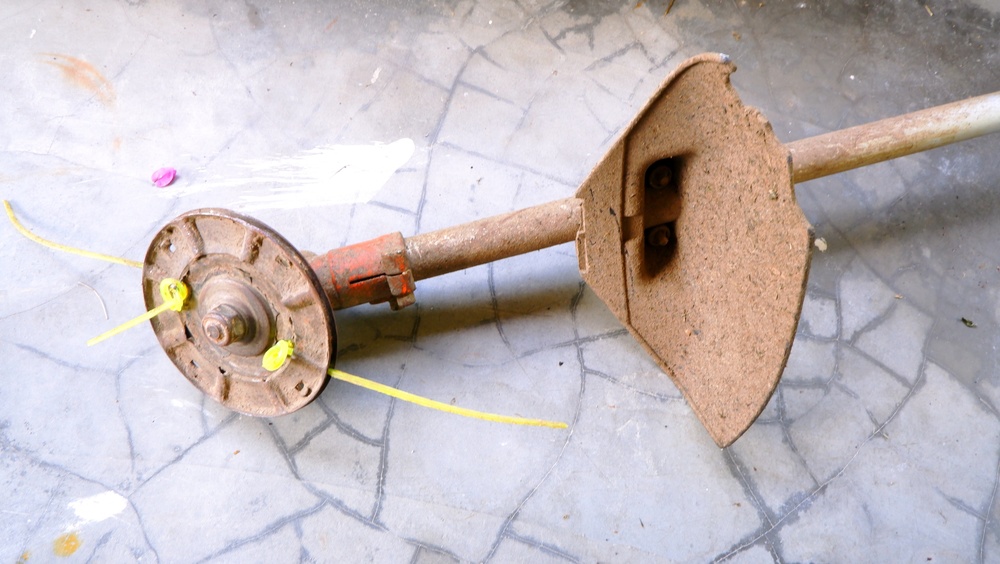

Most machine injuries at New Jersey warehouses and manufacturing facilities stem from hazards that were already known. Guards are removed and not replaced, barriers bypassed, or lockout procedures ignored.
These failures often lead to severe injuries, including amputations and permanent disabilities. New Jersey workers injured by machine guarding failures may have rights under both the workers' compensation system, which covers medical expenses and lost wages, and the civil justice system, which may allow recovery from responsible third parties. Evaluating both avenues is essential after a serious workplace injury.
Key Takeaways
- Federal OSHA standard 29 CFR 1910.212 requires machine guarding on any equipment with moving parts that could cause injury; violations are among OSHA's most frequently cited.
- Federal OSHA regulations, which strictly govern New Jersey's private-sector workplaces, mandate that all hazardous machinery be guarded and that no equipment operate unless all safeguards are in place.
- Workers injured by unguarded machinery in New Jersey can file a workers' compensation claim regardless of employer fault.
- A third-party product liability claim against the machine manufacturer may be available alongside a workers' comp claim, opening the door to pain and suffering damages that workers' comp does not cover.
- As of August 22, 2024, attorney fees in New Jersey workers' compensation cases are capped at 25% under the amended N.J.S.A. 34:15-64, up from the prior 20% cap that had been in place since 1927.
Why Machine Guarding Failures Happen in New Jersey Workplaces
New Jersey's manufacturing corridor, concentrated along Route 1, the Turnpike, and Bergen County's industrial parks, employs thousands of workers on equipment that cuts, presses, stamps, and molds. These are environments where production pressure is constant.
Does removing a guard "just temporarily" create liability?
Yes, and it does so immediately. Under federal OSHA standards, equipment cannot legally operate unless all safeguards are in place. There is no temporary exception.
When a supervisor authorizes production on an unguarded machine, the employer assumes the full safety obligation the moment output begins. An injured worker does not need to prove the employer intended the harm. They need to show the injury occurred in the course of employment, which is a significantly lower bar.
What types of machines most commonly lack proper guarding?
Power presses, stamping machines, conveyors, saws, grinders, and drill presses cause the most guarding-related injuries in New Jersey workplaces. The highest-risk equipment in the state's warehouses and plants includes:
- Power presses and stamping machines
- Conveyor systems without pull-cord emergency stops
- Band saws and circular saws without blade guards
- Grinding machines missing eye shields and work rests
- Drill presses without spindle guards
Workers on these machines face some of the most serious injuries in any workplace, including amputations. These injuries do not resolve quickly, and the medical and wage-loss benefits available through workers' comp become financially critical within weeks.
How does a lockout/tagout failure connect to a machine guarding claim?
Lockout/tagout (LOTO) and machine guarding are distinct requirements, but they frequently fail together. LOTO requires that machines be de-energized before servicing. Guarding prevents contact with moving parts during normal operation. When a worker tries to clear a jam without a LOTO procedure in place, they are exposed to exactly the hazard that guarding is supposed to prevent during operation.
OSHA has cited New Jersey employers repeatedly for violations arising from the same incident. Specifically, a 2019 incident at a Pennsauken shipping supply manufacturer resulted in a finger amputation and ultimately $259,760 in federal OSHA penalties after the employer failed to implement both a LOTO program and adequate machine guarding.
When LOTO and machine guarding failures coincide, the documentation trail is often substantial. OSHA citations, abatement records, and follow-up inspections create a written history of known non-compliance. An attorney working a concurrent product liability or negligence claim uses those records to establish that the hazard was longstanding, not a one-time oversight.
Your Workers' Compensation Rights After a Machine Injury
New Jersey operates under a no-fault workers' compensation system. An injured worker at a Hackensack facility does not need to prove the employer was careless. The question is simply whether the injury arose from and occurred in the course of employment under N.J.S.A. 34:15-1 et seq.
What benefits does a machine guarding injury qualify for in NJ?
Workers' compensation in New Jersey covers:
- All reasonable and necessary medical treatment related to the injury
- Temporary disability benefits equal to 70% of the worker's average weekly wage, subject to the state maximum (currently $1,159 per week for 2025 injuries)
- Permanent partial disability benefits if the injury causes lasting functional limitations
- Permanent total disability if the worker cannot return to any gainful employment
- Specific loss benefits for amputations and permanent loss of use of a body part, calculated under a statutory schedule
Can you file workers' comp if the machine was defective when manufactured?
Absolutely, and a workers' compensation attorney in New Jersey handles this regularly. The workers' comp claim covers you against your employer. A separate product liability claim against the machine's designer or manufacturer can run concurrently.
In contrast to workers' comp, a product liability claim allows recovery for pain and suffering, loss of enjoyment of life, and future earning capacity losses that workers' comp does not address. The two legal tracks do not cancel each other out. New Jersey law allows both.
What happens when an employer disputes a machine injury claim?
Disputes go before the New Jersey Division of Workers' Compensation, which operates workers' compensation courts throughout the state, including Bergen County. A judge of compensation hears the matter and adjudicates disputed issues, including causation, medical necessity, and disability rating.
The process involves formal discovery, medical testimony, and hearings that can extend months. An experienced New Jersey workers' compensation lawyer builds the medical record from the start, which becomes the foundation of any contested proceeding.
Building a Strong Claim After a Machine Guarding Injury
The weeks immediately after a machine injury shape the entire case. Injured workers often make decisions during this window without understanding the full legal picture. Employers and their insurance carriers move quickly to document and contain claims.
Workers who are slow to act often find their medical treatment delayed, their injury description defined by someone else, or early settlement offers on the table before the full extent of their disability is understood.
Should you report the injury to OSHA separately from your workers' comp claim?
Consider it, and here is why. Under current federal reporting requirements, private-sector employers in New Jersey must report amputations and hospitalizations to federal OSHA within 24 hours. When those reports are made, OSHA may inspect the facility.
That inspection can produce citations, photographs, and documented findings about guard condition, lockout procedures, and prior violations. Those records become valuable evidence in both a workers' comp proceeding and any parallel civil case. Workers who report independently or encourage OSHA involvement are protected from retaliation under federal whistleblower provisions.
Many claimants find it helpful to:
- Seek medical evaluation the same day, even if the injury seems minor at first
- Document the machine's condition in writing as soon as possible, including whether guards were present
- Request copies of any OSHA or internal incident reports generated by the employer
- Avoid signing any documents from the employer's workers' comp insurer without legal review
- Consult a workers' compensation lawyer before accepting any early settlement offer
Ask Reinartz Law
My employer said I was at fault for bypassing the guard. Does that end my workers' comp claim?
Not in New Jersey. The state's workers' compensation system is no-fault, meaning employee negligence does not bar a claim. The contributory negligence defense that exists in personal injury cases does not apply in workers' comp proceedings. Your employer's insurer may raise fault to discourage you, but it has no legal weight in the Division of Workers' Compensation.
The machine that injured me was owned by a contractor, not my employer. Who do I file against?
You still file a workers' compensation claim against your direct employer. Separately, a third-party negligence claim may lie against the contractor who owned or maintained the machine, or against its manufacturer if a design defect contributed to the injury. New Jersey courts have long recognized these parallel recovery tracks, and our attorneys evaluate both whenever machinery owned by a third party is involved.
How long do I have to file a workers' comp claim in New Jersey after a machine injury?
Under N.J.S.A. 34:15-51, the statute of limitations for a workers' compensation claim is generally two years from the date of the accident, or two years from the last payment of compensation, whichever is later. Missing this deadline can permanently bar your claim. Filing sooner rather than later also preserves evidence and protects your medical documentation.
Machine Guarding FAQs Answered by Our Hackensack Workers' Compensation Attorneys
Does workers' comp cover all medical costs for a machine amputation in New Jersey?
Workers' compensation covers all authorized medical treatment for a work-related amputation, including surgery, hospitalization, prosthetic devices, and rehabilitation. The employer's insurer controls the authorized treating physician in most cases, which is one reason legal representation matters early. An attorney can challenge a denial of treatment and request authorization through the Division of Workers' Compensation when an insurer refuses coverage.
Can I be fired for filing a workers' compensation claim after a machine injury?
New Jersey law prohibits employer retaliation against workers who file workers' compensation claims. Specifically, N.J.S.A. 34:15-39.1 makes it unlawful for an employer to discharge or otherwise discriminate against a worker for claiming workers' compensation benefits. A worker who faces termination, demotion, or a reduction in hours after filing can pursue a retaliation claim in Superior Court as a separate legal matter.
What does "specific loss" mean for workers who lose a finger or hand?
New Jersey workers' compensation schedules specific benefits for the loss or permanent loss of use of specific body parts under N.J.S.A. 34:15-12. For example, the loss of a thumb carries a different scheduled benefit than the loss of an index finger or an entire hand.
These benefits are paid as weeks of compensation at two-thirds of the worker's average weekly wage, regardless of whether the worker returns to employment. The scheduled loss amount represents a floor, not a ceiling, when additional disability affects the worker's overall capacity.
Does it matter which county in New Jersey the machine injury occurred in?
For workers' comp itself, no, claims are handled through the New Jersey Division of Workers' Compensation statewide. County matters for a parallel third-party civil claim, where venue rules place the case in the county where the injury happened. Bergen County, where our Hackensack office sits, has its own Superior Court and civil jury pool, characteristics an experienced trial attorney factors into case strategy.
What Comes Next
Machine guarding injuries often produce the most severe consequences a worker can face. Amputations and other severe machine injuries carry long recovery timelines, extensive medical costs, and real questions about future employment. Workers' comp handles the immediate financial exposure, but it rarely captures the full picture of what a worker loses.
We represent injured workers throughout New Jersey, with a focus on Hackensack and Bergen County. There are no upfront legal fees, and under the amended N.J.S.A. 34:15-64, workers' comp attorney fees are capped by statute, so representation costs are predictable.
Our workers' compensation attorneys also evaluate whether a parallel product liability or third-party negligence claim exists alongside your workers' comp case. That second track is where pain and suffering, future lost earnings, and full compensation for permanent disability enter the picture, the losses workers' comp does not cover.
If the machine that injured you lacked proper guarding, had a defective design, or was being operated without a functioning lockout/tagout program, those facts matter beyond the Division of Workers' Compensation. We pull OSHA inspection records, review equipment maintenance logs, and work with industry experts when machine design is at issue.
Call us at (201) 778-HURT or contact us online to go over what happened. We will tell you plainly what you have and what to do next.